TL;DR - Activation Details
Summit: Black Mountain, W7W/WH-172
Operator: N7JTT
Distance: 14.21 miles
Ascent: 4,087 feet
Moving time: 5:06:18
Average moving speed: 2.8 mph
QSOs: 8
Activation time: 17 minutes, 17 seconds
Radio: Elecraft KX2
Power: 5 watts QRP
Antenna: AX1 with 13-foot counterpoise
Cell coverage: Usable T-Mobile service at the summit
Trip Report
Black Mountain, W7W/WH-172, probably falls into the category peakbaggers sometimes call a “dumpster” summit, a low, forested, not especially dramatic highpoint that you visit more for the list than the glory. That said, this one turned out to be a much better day than the label might suggest.
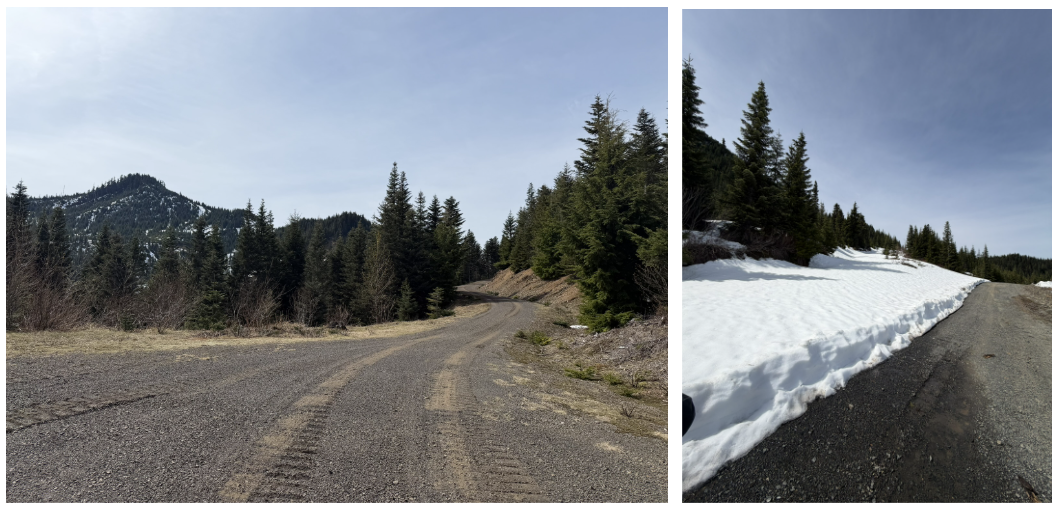
The route was a long, steep fireroad approach from the Nooksack Valley side, gaining steadily through working forest roads before eventually topping out near the summit area. The track came in at 14.21 miles, with 4,087 feet of ascent, and a moving time of 5:06:18, so even if Black Mountain is more hill than alpine peak, it still requires real effort. My average moving speed was about 2.8 mph, which felt about right given the grade, snow, and final off-road push.
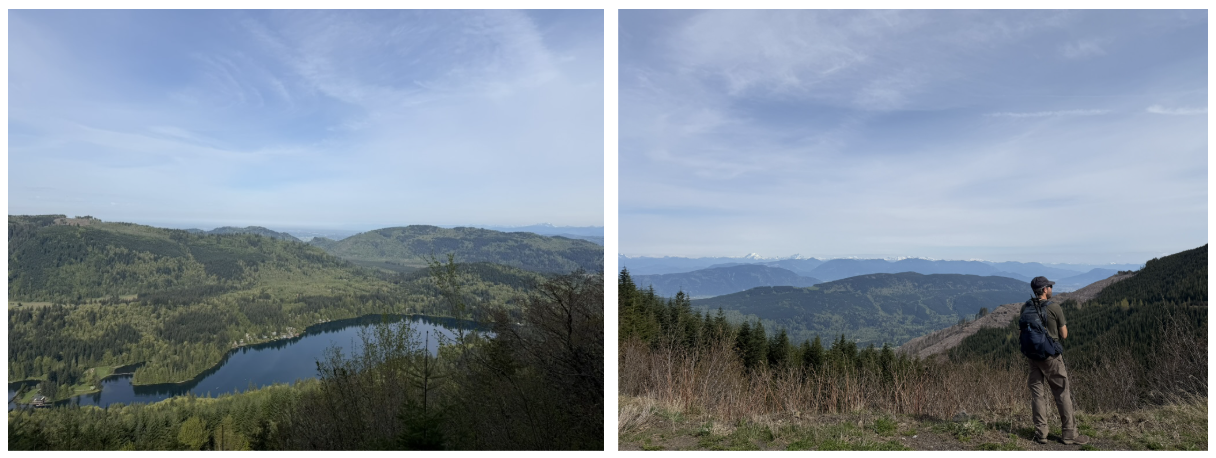
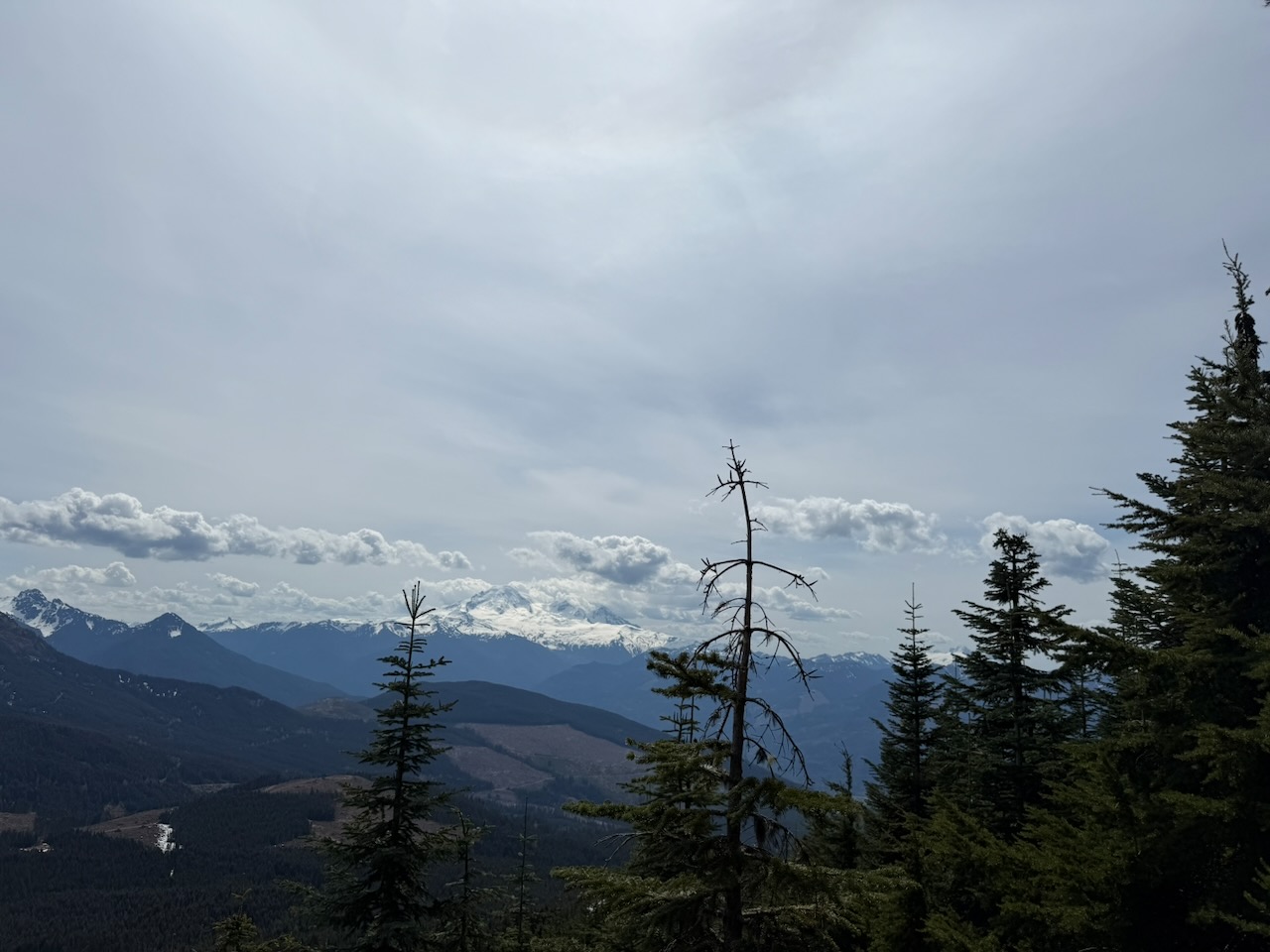
The lower approach was straightforward, mostly road walking with occasional views opening up to the west over the Nooksack Valley. Higher up, the route rounded a bend into a much broader view north toward the Upper Fraser Valley in British Columbia, which was probably the scenic highlight of the climb. Along the way there were also excellent views north and east toward Mount Baker, Church Mountain, West Church, and Mount Shuksan in the distance.
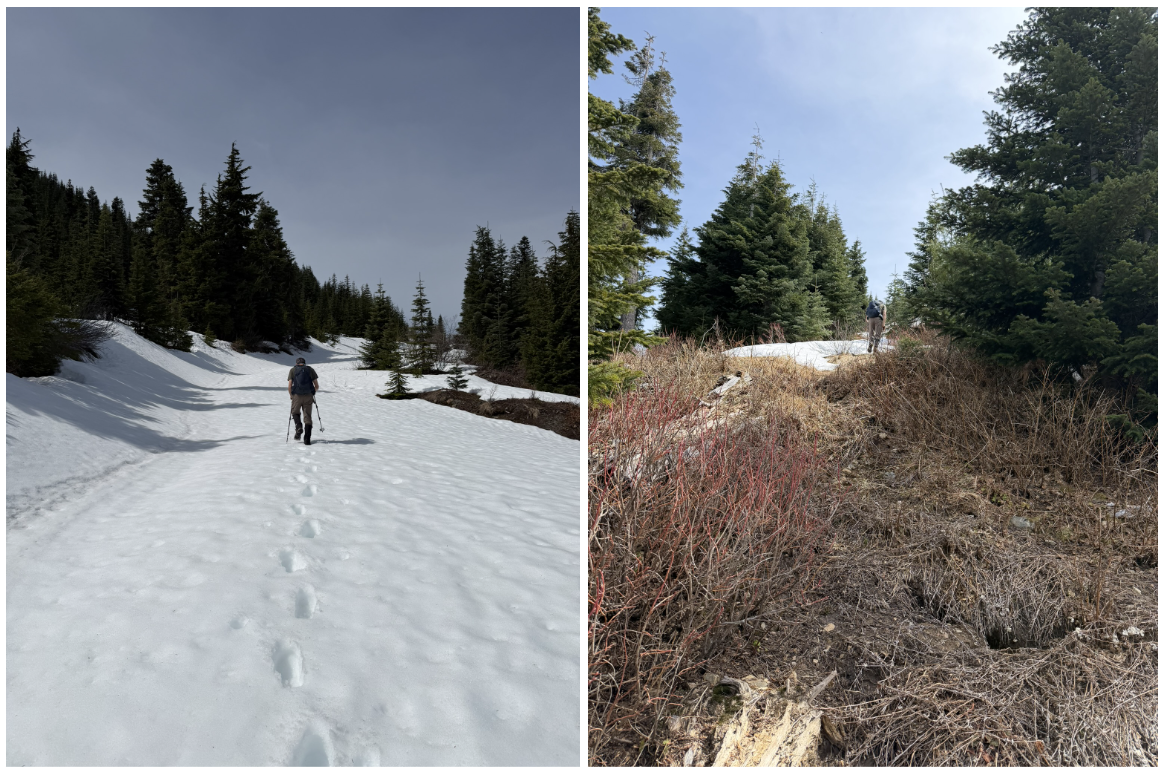
Snow began around 4,000 feet. By the upper sections there were a few feet of lingering snow in places, probably around two feet deep in spots, but it was generally supportive and made for easy travel. Near the summit, the road walking gave way to a short bushwhack through forested terrain. Even with the snowpack, the final push was very manageable.
The summit itself is densely forested, but there was very usable T-Mobile cell coverage, which made spotting and checking conditions easy. I set up with the Elecraft KX2 running QRP at 5 watts, paired with the AX1 antenna and a 13-foot counterpoise tossed over the edge of the drop. It was a compact, fast station, exactly the kind of setup that makes sense when the radio portion is meant to be efficient but still satisfying.
Radio conditions were excellent. After calling CQ, I was quickly picked up by the Reverse Beacon Network, with decent SNR reports to the south and east. Almost immediately, the chasers started answering. In rapid succession, I had 8 QSOs in the log in 17 minutes and 17 seconds, with contacts stretching from the Pacific Northwest down into California, Arizona, and out toward Colorado.
As always, thank you to the chasers. You are the reason this kind of portable operating still feels a little bit like magic. The summit may not be dramatic, and it may not win any beauty contests from the highpoint itself, but the combination of a hard climb, lingering spring snow, big regional views, strong radio conditions, and a clean QRP activation made Black Mountain a very worthwhile SOTA outing.
There was even enough time for a snack before starting the long descent back to the car.